Showing posts with label Living Green. Show all posts

Friday, July 10, 2009

My First Garlic Harvest

As I have noted, it's been rainy around here. I've read that some people have harvested their garlic early for fear of it rotting underground. You are supposed to harvest your garlic when 50% of the leaves turn brown. I planted three different varieties, so as it just so happens they are browning up at different speeds. I decided to harvest my first variety called: Stuil. All of my varieties are hard neck because I had read that these varieties do better in my colder climate. I may try a soft neck variety next year, just for kicks.

Here is my harvest!
My brother Scott (the photographer) quickly printed off directions for braiding garlic off the Internet. If you have ever made a french braid before, that's how you braid garlic. Of course the green / brown stems are stiffer than hair, but after awhile I got the hang of it.
You lay your next stem of garlic down parallel with the next group of stems to be pulled across to the middle.


It may not be the prettiest braided garlic ever, but not bad for my first effort.
I hung it up in my garage, and let me tell you, as you walk towards the garage door, it smells like a garlic festival is underway.

Tuesday, March 10, 2009

Toilet Paper

This 'sticker' actually came from a campaign to use less paper towel, 
but it would certainly work with toilet paper as well!

Yesterday I read that we as Americans are addicted to fluffy toilet paper -- and fluffy toilet paper is bad for the environment. Yes, apparently it is the fiber taken from standing trees that help give toilet paper that plush feel, and most large manufacturers rely on them. The pulp from one standing eucalyptus tree (a commonly used tree) produces as many as 1,000 rolls of toilet tissue. Americans use and average of 23.6 rolls per capita a year. Hmmmm . . . that's a lot of standing trees.  (source: The New York Times by Leslie Kaufman)

I have to admit, in my pre-green days I was a big proponent of fluffy toilet tissue. It is more pleasant. But since reading Serve God, Save the Planet I have made a habit of buying 100% recycled toilet paper. That was until I saw a large package of 7th Generation for sale at Shaw's for $14.00 for 12 rolls. I'm sorry, but paying over $1 a roll is just too steep! If you are interested in conserving the earth's resources, know that when it comes to many 'green' or 'organic' things, whole foods is actually a better place to shop than your local grocery store -- at least in our area. At Whole Foods, it can cost half that. When you purchase less expensive toilet paper, you know the kind that's reminiscent of fine sandpaper, you are probably purchasing a higher percentage of recycled paper. Look at the label. After a few weeks, you get used to it. Hey, it's a step up from the outhouse days when leaves were used! Right?

As I've mentioned in previous posts, we don't even purchase paper towels. For messy jobs I use less-than-perfect kitchen towels, or rags. For everything else, we use the good old fashioned kitchen towel. 

We generally don't buy facial tissue either. But sometimes I'll have a box in our guest bathroom. I was considering taking my collection of hankies and placing them in a glass jar on the counter of our guest bathroom, with a 'dirty' basket under the vanity. You know, like in those really fancy-shmansy hotels where they supply real hand towels. How do you think that would go over?

The funny thing is, when you don't have disposables at the ready -- you end up making due and using less. So not only do you save the earth's resources, you save money when you don't have to purchase tissues or paper towels!

Not long ago, Crunchy Chicken posted a challenge to use washable rags instead of toilet paper. (Someone had suggested pieces of old t-shirts.) We haven't gone that far here, but it certainly would be one less thing to purchase! 

Friday, February 27, 2009

Seedling Progress

As you know I have embarked on this years seed starting. Here is there progress, for your viewing pleasure.
Leeks
(Footnote: leek and onion seeds are only good in the first year. I learned this from Kathy, and then confirmed it for myself. So, go ahead, plant them all -- find a spot for them or give them away. Otherwise, the seeds will just end up in the compost.)
Floppy looking onions. This photo is a week old, they are looking perkier now.
Tomato seedlings. I love several varieties of tomatoes. Not great for seed saving in my smallish garden, but I can't handle just one variety. I went ahead and planted a bunch, many of which are from last year. I don't know if the seeds will last another year, so I went ahead and planted most of them remaining from last year. Gifts anyone?
I was just about ready to give up on the celery I'd planted, when . . . look what I found!
Same thing goes for the eggplant. I was just about to reseed, when . . . 

The more you work with God's creation the more you know He is real.
From the honey bee, to seedlings, it's all miraculous. Truly.

Thursday, February 26, 2009

Tea and Honey

It occurred to me awhile ago that the only way to drink tea responsibly is to buy is loose tea. Usually I purchase our coffee at The Coffee Exchange on Wickenden Street in Providence. The owner was selling and roasting "fair trade" coffee long before it was a buzz word. He has also invested in the families living in the region by creating his own organization Coffee Kids. 

While I'm waiting for my coffee, I've been noticing the loose tea that they sell there. They don't sell a lot of it, but they sell the basics. When another customer strolled in and ordered a bag of black tea, I started to feel . . . guilty. All of you tea drinkers out there, go and take a look at your pantry. See all of those boxes and individually wrapped tea bags? (granted, not all of ours are individually wrapped) Not very environmentally responsible. Whenever I purchase anything (especially food) I look at the packaging and deliberately avoid things that are bagged, boxed and then wrapped in plastic! (I'm an specifically thinking about those chip snack packs you buy at Walmart or Shaw's.) Think about all of the wasted energy and raw materials (or worse, chemicals to make the plastic) that went into all of that packaging. Think about all of the recycling you'll have to do. Think about how much of it isn't recyclable and will end up in the dump. 

So, when I was out of Peppermint Tea, I went to the Coffee Exchange and purchased some loose tea. This enormous jar of tea cost $4.80 . Wow. Nice savings -- on several levels! 
My Mom gave my sister-in-law and I these fabulous little single serving tea pots. The interior is lined with a fine screen that prevents the loose tea from being poured into your cup. It's also very easy to make another pot with the same leaves -- yes, you will still get a nice pot of tea. 

There are several types of tea pots that work nicely for loose tea. When I was in China everyone had a glass tea pot with a basket that set inside, then on the top there was a plunger that looked and worked just like a french press coffee pot. The Japanese restaurant we sometimes go to simply uses a fine strainer over your mug of tea that they remove before bringing it to your table. Then, of course you have the metal balls and such -- which are okay, but a little bit cumbersome. You do have to clean out your tea pot rather than just dumping the bag into the trash (or better yet, your compost!). But really, we can handle that, can't we? We use a French Press Coffee Pot at home. Not only does it make fabulous coffee, but it is glass (not plastic) and we don't have to spend money on coffee filters. All of these things add up. Before you realize it, you'll notice that you spend less time at the grocery store / Walmart / Target and save. Incidentally, coffee grounds are great in your compost! If you don't have a compost, you can sprinkle them around any acid loving plant -- like blueberry bushes! 

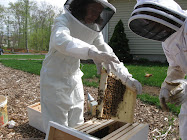
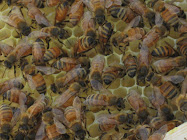
Since we are talking about tea, let me tell you about my 2nd Honey Bee class last night. First, our class has grown. We are all jammed into an Agricultural High School classroom -- all thirty of us, along with the large assortment of teachers. I am amazed at the commitment the teachers have to the aspiring bee keepers. Most of them are men, bringing in all kinds of supplies to show us, putting in a ton of thought into the classes with a PowerPoint presentation and even a syllabus. It seems like there's no place they'd rather be than cultivating future bee keepers and answering all of their random questions. You really get the feeling you could call these guys up at any hour of the day with a bee emergency and they'd walk you through it like they have nothing they'd rather be doing -- and maybe that's just it. Our teachers are happy bee keepers. They are in awe of the honey bee, and rightly so. Honey Bees are amazing. 

  • Do you know that the Queen (of which there is typically only one per hive) lives 2-5 years and in her lifetime only has one mating flight where she mates with 7-15 drones (the males that do nothing but mate and eat honey) then stores the sperm and uses them to create eggs. Amazing. 
  • After the mating season (spring) the Drones just hang out and eat honey. By July / August the Worker Bees (the gals) have kicked the Drones out of the hive and they die of exposure. Our teacher says you'll see the poor rejected dudes laying on the ground by the hive. 
  • There are about 5-7 guard bees at the entrance to the hive (these are the ones that will sting you if you threaten the hive aggressively ... no the whole hive doesn't come out and attack, fyi)  These Guard Bees stand at the entrance and check every bee that goes in and out of the hive to make sure that intruders (like a yellow jacket) stay out. The funny thing is, if a honey bee from a different hive comes and tries to get in, they will reject the honey bee -- unless that bee is carrying nectar and honey in which they say "Come on in Honey!" Smart little bees. 
I'll close by showing you a picture of Ripley doing Yoga. The other day he got my matte out and said he wanted to do some Yoga. So, I got my package of Yoga cards out and he did various poses one by one -- trying his best to duplicate what he saw on the card. Too cute. Honestly.

Tuesday, January 20, 2009

Reuse: The Beauty of Antiques

On Saturday I had a few extra minutes to myself before going to a baby shower for a girl friend of mine from Ecuador. I was looking for a good old fashioned hand-held mixer, thanks again to my friend at RainGarden. Why didn't I think of this sooner? I've long been a proponent of the handheld manual can opener, why not the handheld manual mixer? (I fully understand electric can openers for those who suffer with arthritis type pain, however, for the vast majority of us -- Why can't we handle cranking our own cans open manually? I'm at a loss. And, electric can openers take up space on your counter. I digress.) I meandered into this tiny antique store that is quite literally "a hole in the wall". To get into the store, you must walk down a set of narrow concrete stairs and walk through a small door. The owner does a great job displaying various things on the sidewalk so that you know it's there, but until Saturday I'd never set foot in the place. When I did, the owner was pounding away on a typewriter. I thought to myself, is this for effect -- to set the mood? I glanced around. I'm amazed he stays in business, but the rent must be dirt cheap. Records, clothing, accessories, costume jewelry, little wooden drawers labelled in typewritten lettering (aaha!) things like: buttons, watches, game pieces, nail clippers. There was an entire selection of vintage fabric divided neatly by color, but in my opinion was way over priced. Finally I asked the man if he had any hand mixers. He started wandering around the store making all kinds of clanking noises here and there, and lo and behold pulled out four of them from I don't know where. 

I tested them all and chose the one that was sturdy and smoothest when the beaters twirled around. It's possible that it cost more than a new one a Target, but I'm certain that it will last longer. They just don't make things like they used to.
I also purchased a few antique hand embroidered hankies. Aren't they lovely? They aren't reproductions fabricated in China (which I have purchased in the past, accidentally) these are the real McCoy. These I actually use instead of tissues. 

Sunday, January 4, 2009

An Environmentally Friendly Christmas

Here is a sampling of the Christmas Gift Bags that I made this year ... the rest of them are with their recipients. I purchased a truck load (okay, not really that much) of fabric from Walmart (a flea market would have been even better -- next year) and proceeded to give all of our gifts in the bags I made from it. Just like paper towels and wipes -- if you don't buy wrapping paper, you won't use it!
I also purchased ribbon and some rick-rack, both of which I stitched to the bags.
I had the felt left over from other projects. Felt is great because it wont fray -- just cut into any fun shape and stitch on the fabric! A hot glue gun would also work, but hot glue and fabric can get tricky.

Benjamin made the bag with the Christmas tree on it, all by himself.
Victor, who is not experienced with sewing machines, wrapped all of my gifts in dish towels that he bought for me --tied with ribbon. Clever, isn't he?

Monday, December 8, 2008

Our First Snow!


Snow Covered Dill
.
Yesterday we received our first snow of the season, totaling about 1 1/2 inches. Where we live, the warmer ocean water skirting around the Cape tend to limit our snowfall -- or turn it to rain and slush afterwards. This year, I'm hoping we get some snow that sticks for a few good sledding events! Even though our snow totals were less than 2 inches, we still managed to strap on the snow boots and pants, go for a little sled in the yard and build the obligatory snowman with carrot and coal. My cold frames are snug under the small layer of snow, which I'm planning on leaving in place through today because of very cold weather pushing through today. Eliot Coleman, author of Four Season Harvest, explains that snowfall can act as a great insulator when exceptionally cold weather is passing through. One of the nice things about living up north, is that we have a ready supply of holly, boxwood and pine boughs to decorate with.
.
As we are all busy with festivities of the season and merely trying to keep our housekeeping respectable, I'm going to continue talking about the subject after the new year. In particular -- projects and scheduling! I'll also tell you where I landed with my cleaning calendar (I'm still working the bugs out.) The first of the year is a great time to think about all of the organizing and de-cluttering projects you want to tackle. Where are your rat's nests? I'll tell you about mine, come January.
.
The winner of my first give-away ever was a friend of mine and fellow Community Covenant Church member "Amy". I delivered her orange earrings today. Congratulations Amy!

Snow covered Holly


Snow covered Leeks


Snugly snow covered Cold Frames

Friday, November 14, 2008

Environmentally Friendly School Lunches


What is an environmentally friendly parent to do when it comes to packing school lunches?
The good news is that being environmentally friendly and saving often do go hand in hand.
  • Wrap all sandwiches, breads, carrot sticks, grapes in wax paper -- just like the "old days". Waxed paper is compostable. My 9 year old is well trained and brings all compostable things home in his lunch box. What a guy! Plastic baggies are more expensive, are toxic to recycle (although always better to recycle) and let's face it -- go right into the trash at the school.

How to wrap a sandwich in waxed paper

  • Bake "quick breads" as a great part of a pack lunch. Quick breads are great ways to get healthy vitamins into your children. From carrot, to zucchini, to pumpkin bread -- it's good stuff. Wrap in waxed paper.
  • If you pack a dessert for your children, bake cookies and freeze them. Take them out of the freezer one at a time -- they will be thawed out by lunch time.
  • Use older cloth napkins (maybe with a stain or tear or two) rather than paper napkins. I won't be devastated if it doesn't come home -- but once your children know the routine, they put it back in their lunch box just like any other reusable food container. (No need to continually buy paper napkins.)
  • Go to a thrift store and purchase mis-matched forks and spoons for them to take in their lunches when needed. Again, if you lose one, you won't be devastated. So far, all of mine have come home. (A much cheaper option than continually buying plastic ware.)
  • Pack whole fruits like apples, peaches, pears. Sometimes I wrap the fruit in an old cloth napkin if the fruit is fragile. Train your children to bring home the apple / pear cores so that they can go into the compost. If necessary write "our family composts" on the inside of the lunch box. At first, my (now) 9 year old got pressure to throw stuff away, but he stuck up for himself and explained that we compost!
  • I pack hot soups a lot for my children. They bring it in low wide mouthed thermos. So healthy for them and what's better than soup on a fall / winter day?
  • I was sending my children (who can handle glass carefully) to school with my glass food storage containers. I finally got two complaints in one week from the schools so I ordered stainless food containers from life without plastic. They are adorable and my children seemed to work them just fine. (4 and 9 year old) If you don't know already, I'm anti-plastic. :)

Monday, October 27, 2008

Buying Locally

Some exciting things are going on around here (aside from the fact that I was ... or rather my garden was ... attacked by deer last night ARGH!!!). Although my garden wasn't quite as productive as I was dreaming it would be this summer -- for the past year I've been working on changing what we buy and especially what we eat. It was my desire, after reading Serve God, Save the Planet, to begin to make better choices to take care of the earth entrusted to us by God. Then, I read Animal Vegetable Miracle (thanks to RainGarden) and started getting even more serious. Since then this is what I buy for food:
.
Eggs: From a farmer less than five miles from my house. $3.00 a dozen for free-range, totally natural -- no junkola given to the poor chickens -- Rhode Island Red eggs.
.
Milk: From Monroe Dairy delivered 2x's a week with the old fashioned glass bottles that they reuse.
.
Vegetables: Since summer -- largely from my garden with a few exceptions like garlic and onions. Also, carrots were getting attacked by Bambi, Thumper and the E.B. so I had to supplement. Next year, in addition to considering a fence, I will plant more carrots, and I planted garlic ... maybe next fall I will try onions?? I was also reminded by RainGarden about purchasing local produce that stores well over the winter in larger quantities directly from farms for a good price. I was late trying this, but did get a hold of Butternut Squash in addition to a bunch of apples and eggplant (which don't store very well, so we have to munch on those pronto!) I will do more research and prep for next year. After Halloween I will see about getting a hold of some cheap pumpkins. I've been making pumpkin bread and pumpkin jam.
.
Beef: After watching an episode of OPRAH on conditions inside of pig, chicken and cow "factories" while whipping dinner together one late afternoon -- I recommitted myself to contacting a local couple (among several here in Rehoboth) who raise their own cattle and sell the beef to local customers. I'd done the research already, I just hadn't made the call. They didn't have a lot available just then, but I did get a bunch of hamburger, some stew beef and some tenderloin. Again, these happy looking cows that I saw hangin' out among the trees mostly eat -- GRASS! You know, that stuff that they find in the field while they are roaming around. And, of course no antibiotics, etc., etc. Cool, eh?
.
Bread: I've committed to making my own bread. Both sandwich type bread and also quick breads. Quick breads are great because they are perfect for the boys to pack in their lunches. (Nope, I don't have wrapped, prepackaged, snacky things in their lunch boxes ... and most things are either in a glass container, metal thermos, or wrapped with waxed paper that I then throw into my compost bin. I also recently purchased mis-matched silverware from the Salvation Army that the boys can bring to school in lieu of plastic -- and I don't have to worry about them losing it -- no biggy. Incidentally - .25 cents per fork or spoon.) OK BACK TO BREAD: I contacted (after reading one of Peter Reinhart's books) a local bakery that has a lot of organic breads and other yummy treats to see if I could purchase some of their flour. "No prob!" the guy said. So, I marched down (drove rather) and picked up my two big ole' bags of flour. One french styled white and one organic whole wheat. Half the price.
.
Jams: One thing I do have plenty of now is Jam. Ripley is a committed P,B & J type of guy so I decided to make my own. Not only do I know what went in there -- but when you are buying organic strawberry jam from Whole Foods for example, it's expensive! Although I didn't calculate the cost out, I'm sure I saved plenty.
Herbs: Over the summer I purchased a food dehydrator. After failing to produce successful sun dried tomatoes in our humid southeastern Massachusetts weather, I bought one. I've made sun dried tomatoes, dried apples -- that I used in my granola -- and now HERBS! Isn't that cool? Now, talk about savings -- herbs are outrageously expensive. So far I have dried lavender, rosemary and dill. I still have a little time to do others like Thyme, Oregano and Parsley before they get harmed by the cold weather.
.
Soaps: This doesn't fall into the "local" category really, but it is a big saver on money. You can make your own Laundry and Dishwasher soap that is earth friendly. So, I recommitted to doing that. I'd made some dry Laundry Soap before, this time I tried a liquid version. The Dishwasher Soap is incredibly easy. Kristi does a great job with her instructions. Click HERE for Liquid Laundry Soap, HERE for Powdered Laundry Soap, HERE for Dishwasher Soap.

Thursday, September 25, 2008

The State of My Garden - Fall 2008


My big project.

A girlfriend of mine was putting new windows into her antique home, so I asked her if I could have her old storm windows to make cold frames -- inspired by Eliot Coleman's Four Season Harvest.
Frost will be coming soon here in New England so I need to get busy.
In these frames I should be able to grow cold loving vegetables -- especially greens like arugula, spinach, bok choy, parsley -- No doubt this fall / winter will be a learning year, but I'm looking forward to it!


The one remaining loaf from Karen's Homemade Bread Recipe. The problem with fabulous homemade bread ... two huge loaves disappear in 72 hours.


My yard clippings compost bin. As you can see, this three sectioned bin is made with pallets that I was able to get for free. I will put yard clippings, leaves and grass. The leaves and grass should break down so that eventually I can use it as a "leaf mold" in place of peat moss. Helpful when planting seeds. We (as you can see) have a lot of woods in the back of our property -- so excess clippings etc will go in the woods and I can transport them over for "quick" composting that I can easily turn and rotate. I have another enclosed compost bin for kitchen scraps.


Here you can see my leeks are coming along (although more slowly than I would like) and the peas that Ripley helped me to plant in late August are almost ready for picking. Are you taking advantage of second and third plantings? Growing isn't over for your garden once the tomatoes and zucchini are done ... there is so much more that you can get from your garden!
Here are my cold loving greens coming along - two kinds of romaine, bok choy, arugula, spinach and some random peas that were late comers from an earlier planting. I planted some in late August, some in Early September. A lot of the little seedlings were destroyed when we had the left over hurricanes plow through, so I had to replant.


Here are my strawberries. I planted the root crowns this spring, clipped off the blossoms and helped the daughter plants take root when they sprung from the "mother" plant. Now we can't wait for spring! Our asparagus are also looking great and are ready to go next spring. Contrary to what "they" used to say, asparagus actually do better if harvested only ONE year after planting as opposed to three years -- however the first year you can harvest every 2-3 days for 4 weeks. The following year you can harvest for a longer period of time. What an amazing plant.


Posted by Picasa

Saturday, September 13, 2008

Clutter, Disposing of Disposables and Your Wake!

I'm de-cluttering my house! Two years ago I read Simplify Your Life: Get Organized and Stay That Way along with my sister-in-law Tanya -- and spoke about it at a Women's Breakfast at our church. It is a fabulous book, has very practical, realistic tools and is easy to implement. However, habits do have their way of breaking (why is it often the good ones?) and clutter has it's way of accumulating unless you go to battle against it from time to time. Isn't that the truth?! This has come up in my field of view like a banging drum set because Ripley has just started going to a Montessori school ... and if you've ever been inside one (see picture off the web below), you'll know why I've renewed my commitment against clutter. One of the premises is that children "work" best in a simple, tidy, organized environment -- who doesn't? Right? So, yesterday I went to my work against clutter in my home that's built up over the past two years. First: Toys. Broken toys. Toys you just have too many of. Toys that just don't work well. Toys our kids have grown out of. Chuck them. Recycle when possible. Salvation Army or hand down to friends, family or your church nursery those toys your child has grown out of. I literally collected three huge bags of stuff in those three categories. How about you? How is your clutter? Other areas of attack for me: "Junk" drawers / cabinet (I used to have none, now I have about four), Recipes!, Last Years school papers that I'd put aside to save (go through again - eliminate some more - then store neatly in the attic), Craft Room upstairs. My CLOSET!! (Think of the people who could use the clothes hanging unused in your closet. Send it to the Salvation Army. Or a consignment shop. Perfectly good clothing can be used by someone else. Talk about unsustainable, right?) How about you? What areas would you like to attack?

As you are going through your clutter and your home to organize and reconsider how it functions, consider examining your use of disposable anything. One blog I often check out issued a challenge to get rid of disposable items in your house. I love that idea! We can call it:

Disposing of Disposables Challenge!

Not only does doing away with disposables save the environment, it saves money and time at the grocery store! Here are some suggestions, send me your suggestions and I'll add them in! Let me know if you're committed too!

  • Swiffers - Use old stained shirts and towels.
  • Disposable Household Wipes and Dusters
  • Take-Out Coffee Cups -- especially the Styrofoam ones!! Bring your own and have them fill it.
  • Plastic Grocery Bags!
  • "Disposable" tupperware and sippy cups -- invest in long lasting glass, plus glass won't leech chemicals into your food and drinks.
  • Seemingly "disposable" plastic toys that people give as gifts at parties that break in less than 15 minutes. You know the kind, "Buy 100 for $2.00 ... Oooooo what a savings!"
  • Bottled Water
  • Sponges
  • Kleenex -- use old fashioned hankies

Your WAKE. Committing to PEACE.

Another thing that has stuck with me all week is from Sunday Morning at church and a conversation with one of my girlfriends about PEACE in your home. Our Pastor, Dennis, asked the question "What wake do you leave when you go through a room?" Wake -- as in the mark that a boat makes in the water as it pushes through a body of water. What came to my mind immediately is that time zone at the end of your day when you're getting tired, the kids are getting tired and bickering, you're trying to prep dinner, ask your school aged kid(s) how their day was and make sure they are doing their homework, keep the young one out of the hair of the old one and entertained in some way -- and then your husband walks in. Not a wake of peace. Nope. More like the wake of a hurricane or an ocean liner. Committing to a non-disposable lifestyle is a lot easier for me that committing to peace. I like the idea of peace, but it sure it easy to get sucked into the chaos and join in the chorus "AAARRRRrrrrrggggghhhhhh!" Regardless, I'm committing to pursuing peace. This is all interconnected because organizing, simplifying and planning do help to create a peaceful home. Am I the only one? What's you're story?

Thursday, September 4, 2008

How to Make Your Own Greek Yogurt at Home

No, I'm not Greek. However, Greek Yogurt is the one plain yogurt that I can totally enjoy like I'm "splurging". And, I figure, if you can make your own Greek Style Yogurt at home, you are really saving money. Not only do you save money, but you also save the environment by eliminating all of the use of plastic -- even if you do recycle it, plastic is rather toxic to recycle (although better than not recycling!). All the better to put your homemade yogurt into glass containers that you have saved ... like nut butter jars! Anyway, here is what I did:
.

First, I got started and inspired by The Real Food Revolution blogger. Check her site out.
Second, my first effort was a failure. Hey, it happens. I've made some bad bread and pie in my day too.
Third, I did some more research to see what I could have possibly done wrong and this is where I landed:
.
How to make your own Greek Style Yogurt
.
You need:
  • 1 Gallon Milk
    About 1/2 cup (or less) scoop of plain yogurt for your "starter" (must have "live active cultures")
    1 Large Pan large enough to handle the gallon of milk
    1 Candy Thermometer (or any thermometer that can measure liquids from 100 to 200 degrees F, a candy thermometer is nice b/c it clips to the side of the pan.
  • 1-2 heating pads
  • 2 bath towels
  • 1 large colander
    1 large bowl that the colander can fit into
  • 1 large square of muslin, cheese cloth, or in a pinch a thin pillow case
  • 2-4 very clean large glass jars with tops. Most people write that they are fine with jars cleaned very well with hot soapy water -- but you could sterilize them in your dishwasher if it has that feature, pour boiling water into them before filling while the yogurt is in the fridge draining, or actually go all the way and sterilize them in a boiling water bath. Your choice.

Directions (this really isn't hard ... at all -- my long winded-ness just makes it seem long and labor-intensive. It isn't!)

  • Set 1/2 Cup plain yogurt starter aside at room temperature
  • Put the gallon of milk into the pan and heat it to 185 degrees F over medium heat to kill of any "bad" bacteria -- stirring from time to time to prevent the milk from sticking (or worse) burning on the bottom of the pan.


  • Remove the pan from heat -- and if you'd like to move quickly -- put the pan into an ice water bath in your sink with the top of the pan on -- thermometer sticking out of the side until the milk is brought down to 105 degrees F. If you use the ice water bath method it's really very fast. Otherwise, stick the pan on the counter and wait.
  • Stir 1/2 Cup of the room temperature plain yogurt into the milk - well.
  • Turn your heating pad(s) on medium heat and set them on the counter.
  • Take your pan of 105 degree F milk with yogurt starter stirred in and put it on top of the heating pad. I put another heating pad (set on medium) on top of the pan (with the top on the pan, obviously), but this might have been overkill.


  • Then, cover pan / heating pads with two towels, tucking in the ends to avoid drafts.

  • Let sit for 12 hours -- over night is great. (I made mine during Ripley's nap -- set it to brewing at 3pm and woke up after a good nights sleep at 5:30am - perfect!) The longer the yogurt "brews" the better it is for you -- that good bacteria really gets going. As you pass the 12 hour mark the yogurt is supposed to taste tarter (not necessarily a good thing in my book). I "brewed" mine for 13 1/2 hours (because I was sleeping) and it isn't sour or tart at all -- go figure.

  • In the morning - line your colander with your clean cheese cloth or muslin and set the colander inside a large bowl to catch dripping liquid -- or Whey.
  • When you take the top off your pan and peek in, the yogurt should have formed into something that looks like a custard. There will also be a clear yellowy looking liquid on top and around the sides -- this is your Whey. (as in Little Miss Muffet ... you know) Pour as much Whey off as you can without dumping out your yogurt -- keep the Whey and use as you would buttermilk for baking, or if you're feeling adventurous -- homemade Whey Ricotta.
  • Dump the sloppy yogurt into the cheese cloth / muslin that's inside the colander. Pull up the sides of the cloth, twist and tie a knot on the top so that the cloth is tight around the blob of sloppy yogurt.


  • Put the Yogurt, cloth, colander, bowl into the fridge for 2 hours. I poured the Whey out of the bowl a couple of times to be sure it was draining well, but that might have been overkill.
  • Spoon and scrape the yogurt the yogurt off the cloth and into clean jars.


  • Chill in the fridge
  • Serve with honey and homemade granola.

    My sister-in-law Tanya (a Greek Yogurt connoisseur) taste tested and agreed that it was .... YUMOLA!!
    Incidentally; Ripley, Benjamin and I are downing homemade granola and homemade yogurt like mad ... can you believe it?! Ripley, eating super good for you homemade granola? He even asked for it for lunch. I'm going to have to make more next week at this rate -- I'll take pictures and update this post. Good Luck!

Friday, July 25, 2008

Garden Update


Here is the status of my Victory Garden. Aphids are rampid. Today I sprayed the garden with a soapy water spray. Hopefully this will make a dent in the infestation. The deer haven't destroyed anything recently (I am afraid to be too positive), however Thumper and the E.B. (Easter Bunny) have moved in. Tonight while eating pizza on our front wrap-around porch Victor noticed a RABBIT (I think it was Thumper) hopping along like he owned the place. The nerve. My carrot and beet tops have obviously been someones lunch and dinner in spite of being totally surrounded by marigolds. More pepper spray and grated Ivory Soap I guess.

.


On a more upbeat note ...


My "Nutri-Bud Broccoli" has performed beautifully. I have always thought that broccoli was tough to grow, but this year it was problem free. I cut off the large center crowns when they were ready and then waited for other smaller shoots to sprout up. I need to replant again as broccoli is content in cooler weather.


.

My potatoes are almost ready. My Father-in-law (who is from Portugal and knows a thing or two about gardening and especially about potatoes) told me that potatoes stay in the ground for 3 months, which basically boils down to waiting until the plants are completely done flowering. Then, the plants should be trimmed down --- wait one week --- then dig them out. While I was trimming the tops off I ran into several potatoes here and there, and they looked beautiful! My red potatoes are the most gorgeous red, and the Russian Banana fingerling potatoes look impressive. Of course I will be worried until I pull them all out of the ground that they are half devoured by some pest or other -- but what I saw today looked encouraging. This is the first time I've tried growing potatoes. It seems miraculous to me. Better than unwrapping a gift at Christmastime. Tomatoes, a vegetable I've grown for years, plod along from seedling to plant to flowers to fruit. But, you see the whole thing as it happens. Potatoes do this amazing thing behind closed doors. Wonderful.


.

My Siberian Kale is flourishing. I've been making braised mixed greens. Stealing a few branches off of my turnips and beets -- mixing them with the kale. Cover the bottom of a pan with olive oil. Throw in 1/2 - 1 teaspoon of salt (depending on how many greens you're cooking), plenty of freshly ground pepper and a bunch of shakes of crushed red pepper (I like them spicy), thinly sliced garlic and if you have it- some sliced onions -- cook until translucent and slightly golden over medium heat. Then put the greens in -- they should be slightly damp from being rinsed which will help to steam them. Put the cover on the pan. Toss the greens around from time to time. Take off heat when the greens are done to your likeness. Eat!


.

A few of the beets that took early in the season were ready for eating. I baked them in the oven the good ole Fannie Farmer way with butter, salt and pepper. They were fabulous.


.

My zucchini and yellow squash are only doing OK. Some of the flowers are just falling off (not pollinated?) I should have planted more. That is one thing I've learned. I feared having too many of one thing and therefore planted conservatively with some things. But, invariably some plants get eaten, stomped on, or just don't take. This is true for my zucchini, eggplants and okra plants. Next year.


.

My tomato plants are big and loaded with fruit -- but green fruit. As my father was lamenting the other day ... here in New England tomatoes are for August and September and that's it. But, the are worth the wait and the short season.


.

I planted loads of peppers. Cayenne, Jalapeno, Thai, Sweet Red Peppers, Orange Peppers ... especially red pepper plants. I've been worried about them because I was pushing the planting season a little, then we had a cold couple of weeks. I read that peppers wont produce fruit if they are "put out in the cold". So far I have flowers and I am starting to see baby peppers peek out. Exciting.


.

Alright, I've gone on long enough. More gardening news later ....

Monday, June 9, 2008

Dr. Bronner's All Purpose Soap

Consider using Dr. Bronner's Sal Suds. It's $10.99 for a 32 ounce bottle. It is condensed ... in the true sense of the word. You only use a teaspoon in a gallon of water. I've been using mine for months and I've hardly made a dent in it. I even made my own spray bottle mixture out of it - 1 to 1/2 teaspoon of the stuff and water. A boat-load cheaper than the $4.00 they want to charge you for something similar at Target. (Makes you realize why the companies started marketing them to us in the first place!) Dr. Bronner's is earth friendly, and cruelty-free. Plus, it won't make you feel like passing out from the fumes when you go to clean your shower! Some of that chemical stuff is nasty.

Friday, May 16, 2008

Tuesday, March 25, 2008

Earth Hour 2008

Here is a small way you can join with others to make a statement. Turn off all your lights this Saturday, March 29th from 8 to 9 pm to participate in Earth Hour to raise awareness regarding our energy use and how it effects our earth. This is a global event that was first created in Sydney, Australia last year. Make it a family event - light some candles, read books, tell stories, play games, play hide and seek. Teach your children about the importance of saving electricity. Take the opportunity to check your house for ways that you can save, like connecting your television etc. to a power strip and turning it all off when you're done. Talk about ways that you can save energy. Create a plan of action. You can sign up by clicking right HERE. This will bring you to OUR TEAM Earth Hour Group. Cool Eh? Let's see how many of us we can get to join in. Plus, it's kinda fun, isn't it? Check out this video from Earth Hour. Also from You Tube ... Enjoy.

Thursday, March 20, 2008

Save Trees


Ok, I'll confess this took me one hour. I'd collected catalogs over several weeks (I've done this once before, but not as thoroughly) and sat down and worked through my entire pile. It took me exactly one hour. Really, it wasn't too bad. A lot of catalogs have a specific selection when you call to deal with folks who want to be removed from their mailing list. This gave me hope that others too are making an effort to stop the waste. Particularly with so many being able to access catalogs online, it's really unnecessary. I've been chipping away on this ... I've unsubscribed from DMA, called Valassis at 1-800-437-0479 to stop all of the weekly flyer junk mail, and called several other catalogs previously. Now, when I go to my mailbox, there is very little in there. Exciting. It also means time-saved in that I don't have to go through it, sort it or recycle it. And, of course it saves trees, energy both to produce them and to deliver them. Be encouraged. It's worth it.

Tuesday, March 18, 2008

My Victory Garden - Beginnings


A 21st Century Victory Garden: Victory over Factory Farms, Victory over Chemicals and Pesticides, Victory over gas and pollution used to carry my vegetables all the way from California or Chile. Victory over wasting perfectly useful land on grass (we have a sizable front yard for outdoor sports), Victory over mowing large patches of grass - wasting fuel and polluting - when it's not being used. Here are the beginnings of my Victory Garden. On the left are my first seedlings. Broccoli and Broccoli Rabe, and two varieties of Leeks. Broccoli is a cold weather plant and can be planted here in Southeastern Massachusetts in mid-April. Leeks are a slow growing vegetable and need to be started early in order to be ready before snowfall. They can be "over-wintered" - which means covered with straw, protected from the elements, they go dormant and you can uncover them, pry them out with a pitch-fork and PRESTO fresh leeks in the winter. Cool. The picture to the right is the location of my new garden area (I currently have two raised beds). It should be ready by mid-April. Exciting.

Monday, February 25, 2008

Oil Bill

Ok guys ... I'm a little demoralized. I just received our oil bill. If you remember, I reprogrammed our thermostats cutting down our night time temps drastically and lowered our day time temps from 68 degrees to 66 degrees. I also had our furnace cleaned and tuned. It's been a major stretch for me (I'm always cold) often dressed with wool sweater, wool socks, Uggs, wool hat, and sometimes even a scarf ... INDOORS! Well, accounting for the two extra days in this months bill versus last months and the slight increase in oil ... if the oil price had stayed the same I would have saved a whooping 95 cents a day!! However, the oil price went up, and this month I ended up paying $22.67 MORE. 95 cents may sound encouraging to you, however, let me tell you, there were some days I would have gladly payed $2 a day just to take off the hat and scarf! Help! What do you think?! Should I cave and go back up 2 degrees? I guess ultimately, if oil prices had stayed the same, I would have saved $29.45. That's pretty good. Right??

Wednesday, February 20, 2008

R.I. Slow Food, CSA's and Phosphates

Slow Food Nation
Support local farmers' efforts to become part of the Slow Food Nation movement. Two local Providence Restaurant owners / chefs that invest in local foods Farmstead and New Rivers are holding The Rhode Island Aquaculture Dinner on Sunday, March 30 at New Rivers. The cost for the five-course dinner is $75 and includes mollusks, bivalves and more. The money from the dinner sill send Rhode Island farmers to the Slow Food Nation show in San Francisco. Call New Rivers at 401-751-0350.

"Slow Food Nation inspires and empowers Americans to build a food system that is good, clean and fair.The world's most pressing questions regarding health, culture, the environment, education, social justice and the global economy are all deeply connected to the food we eat and how it is produced. Slow Food Nation is an event at the center of a movement with national impact and global implications. It will engage tens of thousands of attendees in learning how everyday choices affect our wellbeing, our culture and the health of the planet. The event will be held from August 29 to September 1, 2008 in San Francisco, and will bring hundreds of farmers and food artisans from across the country to present an extraordinary range of foods and preparation techniques. It will offer activities for all ages, including food, music, talks, forums, workshops, films and exhibits, all highlighting food that supports an agricultural system that is good, clean and fair."


CSA's
Have you heard of CSA's? No, not CFL's the light bulbs, not CPA's the number crunchers ... CSA Community Supported Agriculture. You basically "sign-up" with a local farm to buy a "share" of the local food grown at that farm. This way you are supporting local farms and living a greener lifestyle by purchasing local foods as they are ready in your local area -- as oppossed to paying for food that's been motored to your grocery store all the way from South America. To connect to a local farm near you go to www.localharvest.org . If you are in the greater Providence, Rhode Island area, or close to Little Compton, Rhode Island there is a wonderful organic and I.P.M. CSA that is worth checking out. www.wishingstonefarm.com You can pick up your "share" from Wishing Stone in Providence or in Little Compton right at the farm (which incidentally is just down the street from our tiny summer place). Wishing Stone allows you to pick what you want from what they have available as opposed to giving you a pre-packed box or bag. Different farms handle distribution differently. Don't delay though, because shares sell out.


Phosphates
Phosphates. Just what are they? Have you seen the labeling on cleaning products boldly claiming "contains no phosphates". Well, that got me to thinking, What on earth are they? Why are they bad for the environment? and What HAS phosphates IN them? Well, the short answer is:


  • A) Dishwasher Detergent is the most common place you will find phosphates in your home. FYI: After a few trials, the best most effective phosphate-free dishwasher detergent I've used is Seventh Generation.
  • B) Phosphates basically act like a fertilizer that when they enter water tables, rivers, lakes ... etc. they over produce algae that rob the water of all of the oxygen then of course fish and other aquatic organisms die.
  • C) It's serious enough that when the government recognized the problems that phosphates were causing, local governments started putting limits on the amount of phosphates allowed in products. In Washington State for example, by 2010 phosphate levels cannot exceed 0.5 percent.

But, it's more complicated than that. About a month ago I did some research online and copied a few articles to a file ... but regretably didn't record where I got them from. So, sorry I'm not to be able to reference these. However, for what it's worth, here are more in depth explainations:

From Article 1:

"Phosphates enter waterways from human and animal waste, phosphorus rich bedrock, laundry, cleaning, industrial effluents, and fertilizer runoff. These phosphates become detrimental when they over fertilize aquatic plants and cause stepped up eutrophication.
Eutrophication is the natural aging process of a body of water such as a bay or lake. This process results from the increase of nutrients within the body of water which, in turn, create plant growth. The plants die more quickly than they can be decomposed. This dead plant matter builds up and together with sediment entering the water, fills in the bed of the bay or lake making it more shallow. Normally this process takes thousands of years.
Cultural eutrophication is an unnatural speeding up of this process because of man's addition of phosphates, nitrogen, and sediment to the water. Bodies of water are being aged at a much faster rate than geological forces can create new ones.
In testing for cultural eutrophication, one would expect to find an algal bloom or scum on the water accompanied by a fishy smell to the water and a low dissolved oxygen content. Do not expect to find a high phosphate reading if the algae is already blooming, as the phosphates will already be in the algae, not in the water. The algae bloom should start where running water enters the lake or bay, so test the water before the area where the bloom begins for high phosphate and nitrate levels.
Monitors should be aware that there are different kinds of phosphates in the water, but a total phosphate-phosphorous reading is all that is needed to calculate the water quality. Use the chart below to rate your water sample:

How phosphorous affects aquatic life
If too much phosphate is present in the water the algae and weeds will grow rapidly, may choke the waterway, and use up large amounts of precious oxygen (in the absence of photosynthesis and as the algae and plants die and are consumed by aerobic bacteria.) The result may be the death of many fish and aquatic organisms.
Environmental Impact: Rainfall can cause varying amounts of phosphates to wash from farm soils into nearby waterways. Phosphate will stimulate the growth of plankton and aquatic plants which provide food for fish. This may cause an increase in the fish population and improve the overall water quality. However, if an excess of phosphate enters the waterway, algae and aquatic plants will grow wildly, choke up the waterway and use up large amounts of oxygen. This condition is known as eutrophication or over-fertilization of receiving waters. This rapid growth of aquatic vegetation eventually dies and as it decays it uses up oxygen. This process in turn causes the death of aquatic life because of the lowering of dissolved oxygen levels. Phosphates are not toxic to people or animals unless they are present in very high levels. Digestive problems could occur from extremely high levels of phosphate."
From Article 2:
"Back in the 1970s, the U.S. government recognized the problem of phosphorus pollution -- it can cause massive algal blooms in waterways that screw with ecosystems by robbing the water and aquatic life of all-important oxygen -- and started trying to come up with alternatives. Meanwhile, states and localities became more and more aware of the undesirable effects of phosphorus and began acting on their own to limit or restrict its use in laundry detergents, the first places being five cities in Illinois in 1971. (Way to go, Illinoisans!) By the 1990s, enough states and localities had limited or restricted laundry-detergent phosphates that detergent companies saw the writing on the machine and decided to voluntarily phase them out in all domestic formulations, which was done by the mid-1990s.
The main reason dishwashing-detergent phosphates didn't get the same treatment was that the best alternatives, enzymes, were neither common nor cheap even as late as the early '90s. There was also the influence of heavy lobbying by detergent makers and
phosphate cheerleaders to keep them in. And so phosphates remain in many detergents at varying levels, even though they don't need to be there.
There are plenty of eco-friendly, phosphate-free alternatives that wash dishes just as well or better than phosphate-laden ones. And you probably won't be surprised to learn that mainstream, big-name detergents have lots of other suspect ingredients that are derived from petroleum and aren't so environmentally benign, a main one being artificial fragrances. So it's
best to use one of the eco-brands anyway, and any eco-brand worth its eco-label will be phosphate- and chlorine-free.
Some states and localities are starting to severely limit or ban phosphates in dishwasher detergent too. My spiffy home state of Washington
signed new rules into law this year that will keep the phosphorus content in dishwashing detergent to 0.5 percent beginning in 2010. It's a significant cut, since detergents now contain up to 9 percent."

Hope you find this interesting and informative. Enjoy!