Showing posts with label Simple Living. Show all posts

Monday, January 11, 2010

Back at the Skating Pond


L-R: Ripley, Reese and Rosalie

On Sunday, although I had a million and one things to be done at home, I took Ripley and went to my brother's skating pond for some fun while the cold weather is still holding. But THIS TIME I brought along hot chocolate (the homemade kind with milk, chocolate and vanilla) and chocolate chip cookies. [Note: the Chocolate Chip Cookies were made from my own "Tollhouse Tubes" that you might purchase in the grocery store. I made a double batch of cookie dough, lined up a 'logs' of dough on plastic wrap and threw it in the freezer. This way you can have fresh cookies on the fly!]

Here's the skating pond. Isn't it great? This weekend, my brother Scott and a couple of his buddies shoveled snow off the remaining half of the pond. I don't know about the other guys, but Scott was just a wee bit sore. After skating for awhile, the kids put on their boots and went sledding down the hill onto the ice! What fun, fast sledding!

This is (if I do say so myself) an adorable shot of my niece Rosalie and her "Papa", Tanya's father, sledding.

Time for Hot Chocolate and Cookies!

Which'l give you enough energy for some 'Boot Hockey'!
Pictured: Ripley, Tanya's Dad: David aka: Papa, Reese and Scott

Tuesday, January 5, 2010

The Upside of Cold

The new place that my brother Scott and his wife Tanya just purchased in town has a small manmade swimming hole in the back woods. Yesterday after school, we took advantage of the cold weather and went for a skate! My brother Scott in his customary form purchased a real-deal ice tester. When they emailed a picture of their family on the ice two nights ago, we rushed over the very next day! What fun. It's a crime, truly, that so many of these joys have been robbed of children in fear of crazy law suits. Several ponds around town carry a sign out front "No Skating". In "wining", we've lost. And it's a shame.

Next time I will be sure to save time to brew some hot cocoa! When Scott and I were kids living in both Illinois and Maine where cold weather is a 'sure thing', Mom would bring along a big thermos of hot cocoa to warm us up. What a treat. Fond memories. Next time! We still have a weeks worth of cold weather in the forecast.

Benjamin and Ripley marching into the woods
Brothers skating
My nephews Spencer and Reese, brothers sliding.
What adorable boys, would you just look at Spencer's blue eyes?!

Tuesday, June 30, 2009

American Gothic

Have you ever wondered why the man and woman in Grant Wood's American Gothic painting look so solemn?
I've done some research and I can say with a high degree of confidence that they . . .

had been working to put up a chicken run fence.

It has been brutal.
We live in an area of town called "Rocky Hill". Need I say more?
We are digging the good old fashioned way with pick and shovel. No fancy, expensive, rented Bobcat or backhoe, no . . . just the sweat off our brow, and skin off our hands. We are just about done. We started nailing the fencing to the posts late last night and are hoping to finish today.

The kicker is . . . this is Victor's vacation week. Not exactly what every family dreams of . . .
At one point when I was exhausted and demoralized I tried to motivate myself by thinking of people in North Korea who are punished by being sent to hard labor camps. Get a little perspective Sandy and stop feeling sorry for yourself!
In the end, it will be well worth it.

Sunday, June 28, 2009

Homemade Strawberry Jam!

Although I have two strong rows of strawberry plants this year (second year), they didn't produce enough all at once to support a jam harvest. So, on Friday my Mother (aka: Grandmama), Sister-in-law Tanya and all of the grand kids gathered for our third annual strawberry picking extravaganza. 

Ripley was the chief eater in the group and managed to put about ten strawberries into his basket. The rest went into his belly. 
Grandmama continued her custom of helping to fill her grandchildren's baskets ... which promptly get consumed. In years past she's likened the experience the feeding baby birds. "Put one in my basket Grandmama. Put one in mine." 

Doesn't Rosalie look adorable in her bonnet? 
Reese Bow. Another champion consumer.
Benjamin was a great help and managed to fill up 1/2 of a large basket before he decided he'd had enough. Of course there were plenty of strawberries consumed. 
Notice Ripley .... CAUGHT, red handed! Quite literally.
I made three different varieties of jam last year. My favorite by far was a recipe adapted from the book How to be a Domestic Goddess, by Nigella Lawson. It has balsamic vinegar in it, which sounds odd, but trust me, it was the best by far. Love. Love. Love. So, I made a truck load. 14 Pounds of strawberries, already hulled, might I add. 

Sugar is a very important ingredient for preserving jam. Initially I thought I'd cut back the sugar content, until I learned that the ratio of fruit to sugar is very important. The exciting thing is that Fannie Farmer says that "honey may be substituted for up to one-half the sugar in the recipe". So, one day when I have honey (if the sun ever stays out long enough) I will be able to use some of that! Exciting! 
Here is the recipe:
Strawberry Jam
7 lbs. strawberries, hulled
8 Cups sugar
1 lemon, juice and zest
1 1/2 T balsamic vinegar


Much to my chagrin, I have a ceramic top stove. If you do any serious cooking, please steer away from these. The clean up aspect may be tempting, but at least my circa 2001 version takes much longer than a traditional coil electric stove to heat water. No contest. It's possible they have improved the technology, however, I actually read a warning on my pressure canner that I purchased last year (granted, it looks like a tank) that the weight of it all, plus heat, could crack the ceramic top. Good grief. 

In any case, it takes longer than it would otherwise to reach high temperatures. Fannie Farmer says that the "jelling point" for strawberries is 238 degrees. Reaching this temperature will help you to determine if your jam is "ready". For the life of me I couldn't reach this temperature with my ceramic top. I had tinfoil wrapping the pot, the cover on . . . . the highest I could get was 215 degree. Granted, this was a very large batch of jam. Regardless, come to find out, strawberries have a low pectin level so reaching a very firm texture is impossible unless you add in commercial pectin. I am fine with a jam that is less firm than what you'd see in the grocery store. 
Here are my jars -- freshly sterilized. 
Put your jars in the pot, cover them with water and bring to a boil. Boil for 20 minutes.
All done. Yum. Yum. Yum.
I didn't sterilize enough jars for all of the jam I had. I was two jars short. So, that jam went into clean jars that I then put into the refrigerator. 

Sunday, April 5, 2009

Our Progress towards Sustainability

There are two books that started me on this journey of sustainability. Taking responsibility for my own choices and how they impact our earth, recognizing that collectively we can make a difference. 

The first is Serve God Save the Planet, by Dr. Matthew Sleeth. Where he challenges the old view of Christians that there was little need to care for the earth and points out that in the beginning God did entrust the earth to our care. And, when we sabotage land and resources that others depend on for life, that's not really loving our neighbor . . . is it? Ignorance is not a "get out of jail free card" we should be responsible and learn about how the choices we are making are effecting the lives of others. For example, have you ever researched the impact of unsustainable coffee farming on their local communities? Suddenly that Folger's doesn't taste very good . . . even if it's cheap! 
Dr. Sleeth writes: "Serve God, Save the Planet is meant to elicit personal accountability rather than political change. Its lessons are meant to teach individuals, families, and communities not much larger than a congregation; and yet it looks at larger issues because they profoundly affect each of us."
"I am convinced that when the church becomes fully engaged in the problems of creation care, we will overcome seemingly insurmountable odds. As all those who consider themselves people of faith grow in their understanding that God holds us accountable for care of his creation, we will begin to see positive changes on an unprecedented scale."
It was in this book that I learned about hanging out my laundry to dry and the environmental importance of growing our own food. Then . . . 

I read Animal, Vegetable, Miracle by a favorite fictional author of mine, Barbara Kingsolver. It documents her family's journey to eat local food that they either grew themselves or purchased from local farmers. Why? What is the point? The bottom line is that factory farming is destructive to our environment and lowers the quality and taste of our food. In addition, schlepping all of our foods from all over the world is a huge waste of fuel and a big contributor to pollution. This was a profound book for me. Eye opening. I loved it. After reading these two books I started changing . . . and planning! 
<span class=

So, how are we doing? Here is our progress:

We started composting
We started recycling - everything!
We put in a large back yard garden, eliminating a large plot of grass that was largely unused and had to be mowed, eliminating mow time and gas usage.
We have made an effort to grow a variety of things that are "ready" at different times of the growing season and that "keep" -- this year is my first effort at growing winter squash, and last year my leeks were a huge success! The garlic I planted last fall is looking good so far . . . 
We planted perennial plants like asparagus, strawberries and rhubarb.
We put in a small orchard including 3 apple trees, 2 pear trees, 2 peach trees, 6 blueberry bushes, 1 apricot tree, 1 cherry tree. 
We tamed and pruned a wild blackberry patch.
We will be planting a new raspberry patch.
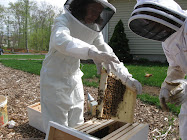
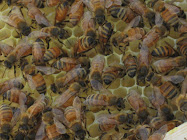
We will be keeping our own honey bees, which will help with pollination (a bit of a problem last year) and eventually will provide us with local natural honey! Our bees come on April 27th!
We started buying milk from a local dairy, with an old fashioned milk man and glass bottles.
We purchase our pork and beef almost exclusively from a local Rehoboth farmer.
We purchase our eggs from another local Rehoboth farmer, large beautiful Rhode Island Red eggs.
We started making our own household cleaners without all of the nasty chemicals that come along with the store bought varieties -- plus the savings has been huge. 
We hang our clothes out to dry -- unless I have a major back log, which I've been struggling with recently (and our electric bill shows it!). 

How is your journey? 

Tuesday, March 10, 2009

Toilet Paper

This 'sticker' actually came from a campaign to use less paper towel, 
but it would certainly work with toilet paper as well!

Yesterday I read that we as Americans are addicted to fluffy toilet paper -- and fluffy toilet paper is bad for the environment. Yes, apparently it is the fiber taken from standing trees that help give toilet paper that plush feel, and most large manufacturers rely on them. The pulp from one standing eucalyptus tree (a commonly used tree) produces as many as 1,000 rolls of toilet tissue. Americans use and average of 23.6 rolls per capita a year. Hmmmm . . . that's a lot of standing trees.  (source: The New York Times by Leslie Kaufman)

I have to admit, in my pre-green days I was a big proponent of fluffy toilet tissue. It is more pleasant. But since reading Serve God, Save the Planet I have made a habit of buying 100% recycled toilet paper. That was until I saw a large package of 7th Generation for sale at Shaw's for $14.00 for 12 rolls. I'm sorry, but paying over $1 a roll is just too steep! If you are interested in conserving the earth's resources, know that when it comes to many 'green' or 'organic' things, whole foods is actually a better place to shop than your local grocery store -- at least in our area. At Whole Foods, it can cost half that. When you purchase less expensive toilet paper, you know the kind that's reminiscent of fine sandpaper, you are probably purchasing a higher percentage of recycled paper. Look at the label. After a few weeks, you get used to it. Hey, it's a step up from the outhouse days when leaves were used! Right?

As I've mentioned in previous posts, we don't even purchase paper towels. For messy jobs I use less-than-perfect kitchen towels, or rags. For everything else, we use the good old fashioned kitchen towel. 

We generally don't buy facial tissue either. But sometimes I'll have a box in our guest bathroom. I was considering taking my collection of hankies and placing them in a glass jar on the counter of our guest bathroom, with a 'dirty' basket under the vanity. You know, like in those really fancy-shmansy hotels where they supply real hand towels. How do you think that would go over?

The funny thing is, when you don't have disposables at the ready -- you end up making due and using less. So not only do you save the earth's resources, you save money when you don't have to purchase tissues or paper towels!

Not long ago, Crunchy Chicken posted a challenge to use washable rags instead of toilet paper. (Someone had suggested pieces of old t-shirts.) We haven't gone that far here, but it certainly would be one less thing to purchase! 

Friday, February 27, 2009

Canning and Preserving

[biggest+kitchen+table.<span class=

Thanks to Rhonda Jean from Down to Earth for The Biggest Kitchen Table: Discussions on Simple Sustainability. This Kitchen Table Topic is about Preserving and Canning. What a fabulous idea!

Last summer was the first time I've canned / preserved. I've had a large garden before in my previous home, but just last year had the opportunity to expand from two raised beds. Last spring we put in a large garden (in addition to the raised beds) and a small orchard along my side yard. Both of these areas replaced grass that we no longer have to mow. We have one large patch of grass left in the front yard for the boys to play sports.

In the garden I planted perennials such as rhubarb, asparagus and strawberries - all of which I should be able to harvest from this year. (Strawberry-Rhubarb Jam anyone?) In the orchard, I planted 3 apple trees, 2 pear trees, 2 peach trees, 1 apricot tree, 1 Bing cherry tree and 6 blueberry bushes. I am looking forward to harvesting and preserving these fruits in the future. 

While my trees, bushes and perennials were in their infancy last summer, I grew about 20 tomato plants among many other vegetables. I checked out a canning / preserving book from the library, purchased some canning jars and got busy. For all of my tomatoes I used the water bath method of canning. I had purchased a pressure-canner, but to be completely honest, it looked (and the directions seemed) so intimidating that I didn't use it all summer! Isn't that horrible?! Well, anyway, I canned both whole tomatoes and tomato puree. The thing about the whole tomatoes was, even though I packed them down with all my might before sealing them and putting them into the water bath, when the jars of whole tomatoes came out of the bath, they had settled down lower than the amount of space you're supposed to leave at the top. Hmmmm. (Input anyone?) I was very nervous about using my first canned tomatoes. I studied books and articles online to recognize canned food gone bad, like I was studying for a bar-exam. I'd never done it before and pretty much taught myself (and asked a good friend a few pertinent questions at the last minute), so I didn't have a lot of confidence that everything would work out well. But guess what?! They were fabulous. When I opened my jars through the winter (I just used my last one, last week -- alas.) the seal was super tight and the tomatoes smelled fresh from the garden. Wonderful! 

The other thing I did with my large harvests of tomatoes was dry them in my new dehydrator. I tried making sun dried tomatoes the old fashioned way in the sun over 3-4 days, but before they dried completely, mold struck. I think it's just too plumb humid over here in the northeast. It's tough because you need several days in a row of perfect sunny days with low humidity. Colorado would be perfect. Massachusetts . . . no so much. After my failure, I invested in a dehydrator. It was quick and easy to slice loads of tomatoes and line them up on the dehydrator shelves. They have kept well all winter long (just used up the last jar) and we've enjoyed our own tomatoes in our favorite pasta dish. Next year I will be doing even more with my dehydrator. Tomatoes, Fruits (for granola), Herbs, Herbal Tea. I can't wait.

The other thing I canned / preserved last year was jam. I have a big PB&J guy here, so I figured I'd save by picking my own strawberries and blueberries, and making my own jam. Plus, I was hoping that, like with most things, when they are homemade they taste even better! The wonderful thing about preserving jams is that as long as the fruits are high acid fruit, you don't have to run them through a water bath or pressure-canner. You simply sterilize the jars, make your jam, load them up to the correct height, run a spatula around the sides to make sure the air bubbles are out, put the tops on and let them cool. Voila! Jam! My strawberry jam came out the best. I could eat it right out of the jar and the strawberries taste so fresh. 

Here is the recipe:
Strawberry Jam
7 lbs. strawberries, hulled
8 cups sugar
1 lemon, zest and juice
1 1/2 T balsamic vinegar
Put all ingredients in a large pan. Bring to a boil for about 5-8 minutes until you have reached the setting point. Put into sterilized jars. Yum. Yum. Yum.

Link Rhonda Jean's blog here to read other posts on canning and preserving HERE.

Tuesday, February 10, 2009

The Joy of Blocks

Blocks are a very popular in our home. Blocks are fabulous because they are so simple, but let imagination and creativity run wild. The sad thing is, great blocks are hard to find. Go to your basic Toys R Us, Walmart or even most locally owned toy stores and you will find little mini versions of what you remember playing with as a child.

"Where do I find great toy blocks?" You ask? Constructive Playthings. They are a bit of an investment ($49 - $100+), but they will be a toy in your home with longevity. Benjamin, at 9, shows no sign of retiring from his love of blocks. 

One thing that we learned from Ripley's Montessori school is to pair the blocks with two marbles and a little glass or ceramic jar (custard cup). The kids build ramps and roads for the marbles to roll along or down, then into the cup. Believe me, good for at least an hour of fun. Incidentally, Montessori schools believe in using breakable things. This is how children learn to be careful with their things. If they are constantly surrounded by plastic, why worry? Why be careful? Just like potty training, there are bound to be messes, but that's called learning.  

(ps: That basket the blocks are in? That is from my CD organization project. Presto! A "new" basket.)

Wednesday, February 4, 2009

Starting Your Own Seeds

Here they are! The first seeds that I have planted for the 2009 season! Exciting. I am going to plant most of my seeds earlier than I did last year. They were tiny little seedlings by the time May came around. One reason may be that it was a bit too chilly for their liking down in our basement. Our basement is finished, but we keep the heat way down unless someone is down there playing. Soooo . . . I'm going to have to try and resolve that somehow. 

The first seeds I planted were from the onion family. Last year I planted leeks, starting them from seeds. Although their growing time is very long (100 days +) they were extremely low maintenance. No one wanted to eat them (bugs or rabbits or chipmunks or deer) and they just sat there minding their own business, plodding along. Even if you don't get to picking them -- they just keep on keepin' on during the entire winter. Wow. What a plant! Yesterday I planted: Siegfried Leek (winter hardy), Bandit Leek (winter hardy), Riverside Onion (stores for 5+ months, smaller) and Siskiyou Sweet Onion heirloom (cold hardy to -10 degrees, but not a good storer, large flat 5-7" bulb). 

Planting your own seeds is simple! And cheaper than purchasing seedlings. Plus, you will have a lot more variety to choose from when purchasing seeds from seed companies.  

  • First, buy flats for planting your seeds into. I saved all of mine from last year. With good care they should be able to last you many years. Plain Old Kristi was very resourceful about saving all kinds of containers to plant her seeds into. Check out some of her ideas here.
  • Buy seed starting soil. Lighter than potting soil, it's best for seeds. Or you could mix your own by combining potting soil, compost and peat moss or leaf mold. I am hoping to make mine either next year or the year after depending on how my leaf mold compost bin does.
  • Buy your seeds. It's not too late! I have been happiest with my seeds from Seeds of Change. Abundant Life Seeds and Johnny Seeds have also been very good. In these catalogs there are a wide selection of vegetables and fruits -- with several different varieties of each kind. 
  • Fill a bucket with an inch or two of water, dump soil up to the top of the bucket, drizzle a little more water on top and toss. This is a great job for the kids. Ripley was my soil stirrer. 
  • Fill your containers with soil. (Another job that Ripley did.) Pack the soil down lightly, so that when you go to take your little seedling out, the whole clump wont fall apart. Plus, soil compacts a bit and your seedling will need some soil to sink it's roots into.
  • A good rule of thumb, in general, is to plant each seed in a small hold double it's size. So if you have a small onion seed that's just under 1/8" wide, plant it in a hole 1/4" deep. But this information should also be on the back of the seed packet. I made my little holes with a pencil. 
  • Drop your seeds in the holes and gently cover and pat each seed with soil. 
  • Plant more seeds that you think you will need. Invariably you will have some fatalities or seeds that just didn't "take". Plus, seedling make great little gifts to friends! 
  • Cover your seeds with a plastic top, or plastic wrap, or plastic bags (lifted off the soil with Popsicle sticks or twigs) to keep the soil evenly moist. This isn't imperative, but it keeps the maintenance lower (really no need to water in this stage if the top is on). 

  • Seeds with a hard "shell" on the outside sprout even more reliably with soaking. Soak for 4-8 hours in a little water at room temperature. I have not done this with all of my seeds. But frankly, it's a little bit of a pain. The seeds stick to the bowl, and it's tough to drain the water without losing a few seeds. I had several different types of peppers and tomatoes (the seeds that I soaked) and I had every small custard cup and bowl out trying to keep them separate and their varieties "tagged". This is not necessary, but it is supposed to help your seeds along, particularly more challenging seeds. I'd say, if you are up to it, go for it, if not -- bypass this step. 
  • Another sure fire way to get your seeds to sprout without worry is to put them on top of a heating pad set on low. This is a miracle worker -- particularly if you live up north and keep your house cool. Many seeds need to be at least 70 degrees in order to germinate (this information should be on the back of the seed packet). I wish my house was 70 degrees! But it's not. Humph. 
  • Once your seedlings have sprouted, take off the cover and put them in a very sunny window or under a fluorescent light. In our house, we only have one window with southern exposure -- and it's in Ripley's room! So I had to use fluorescent lights. I bought these cheaply at Home Depot last year for something like 9-14$ apiece. It's a one time investment. Not a big deal. The light needs to be lowered to 6" above the seedlings. I have my lights suspended with sturdy string that is looped through hooks that are screwed into the wooden beams in my basement's ceiling. 
  • The directions on the back of your seed packets will tell you how many weeks before your last frost you should start your seeds indoors. The directions will also tell you if it's best to sow them directly into your garden (root vegetables for example). Some vegetables are very easy to plant outdoors and quick to grow, so they don't merit the effort to start seeds indoors ahead of time. Examples of these are: Beans, Peas, Cucumbers, Squash (summer and winter), and lettuce. Directions on the packet will also tell you when it is safe to transplant the seedlings outside or sow directly into the soil outside. For most vegetables, this will be after the threat of frost has past. However others, like peas, beans, lettuce, and other cold weather greens can be sowed earlier.
  • Now, once your seedlings are ready for planting STOP! It is necessary to go through a period called "hardening off". That means that a week before you are ready to plant your seedlings, bring them outside for several hours, then bring them back inside -- for 7 days, give or take. If you don't do this, there is a very good chance that your new seedlings will die in short order. This process builds up the seedlings resistance to wind, colder temperatures, outdoor sunshine, etc., etc. 
I hope these directions help -- especially for those of you who are hesitant to grow your own vegetables. It's just not that hard. Start with easy things like lettuce, arugula, kale, beans, tomatoes, cucumbers, squash, herbs such as basil and parsley (only the tomatoes should be started from seed indoors). Or start very simply with ONLY those things you can easily sow directly into the soil. A girlfriend of mine started a small kitchen garden along one side of her house. She had more lettuce, cilantro, cucumbers, tomatoes, and parsley than she knew what to do with. Of course this year she wants to expand! Beware, growing your own food is addictive! And, that's a good thing. :)

Thursday, January 22, 2009

Too Many Toys?

Recently, I've been wondering about toys. Do my children have enough toys? Sometimes when I go over to a friend's house, I wonder. All of the newest gadgets and novelties, lined up ready for playing. My oldest, Benjamin has been around and "collecting" toys for nearly 10 years (in May). As they break I sift through them and try to keep them "fresh". We have the wooden train set, the electric train, the Lego's, the blocks, dress-up stuff, puzzles, matchbox cars, games, learning games, chess, microscope and other scientific things for Benjamin . . . When people ask what my children need for gifts (birthdays and holidays) I am usually at a loss. We haven't gone down the video game route: the Wee, PlayStation or GameBoy. 

Then, on Monday when I had both boys at home, I watched them play. Most of their "play" is inventive and imaginative. Maybe it involves a few cars, but not on a track. A ball, but not in a net. We have had plenty of snow to play in, so I sent them out to do a little shoveling (you know how jobs go for kids, it's the effort that counts) and to fetch a load of wood on their sleds. They had more fun. In short order they were sledding around the yard. And after lunch we went outside again to build snow forts. 


All day long, we didn't turn on the television or play video games (that stands to reason, since we don't have any). Sometimes I wonder (when my boys were bickering about who was or wasn't doing their job) if parents today don't want to do the work involved in good parenting. At one point, early in the day, I thought "Gee, it would be so easy to just plunk them in front of THE BOX." But, I didn't, and I think my boys are better for it. We had such a blast building "igloos" at the entrance to our driveway where the snow piled high from passing plows and Victor's shoveling. One for each boy.
I joked that they should spend the night out in their igloos. That was a bad idea. They both jumped at the chance and I had to explain that I was just kidding, and that we would need lots of leather, fur, wool and fire to get through the night without freezing. 

With too many toys, video games, computer games and television -- what's the incentive for trudging out of doors to let your imagination run wild?

Tuesday, January 20, 2009

Reuse: The Beauty of Antiques

On Saturday I had a few extra minutes to myself before going to a baby shower for a girl friend of mine from Ecuador. I was looking for a good old fashioned hand-held mixer, thanks again to my friend at RainGarden. Why didn't I think of this sooner? I've long been a proponent of the handheld manual can opener, why not the handheld manual mixer? (I fully understand electric can openers for those who suffer with arthritis type pain, however, for the vast majority of us -- Why can't we handle cranking our own cans open manually? I'm at a loss. And, electric can openers take up space on your counter. I digress.) I meandered into this tiny antique store that is quite literally "a hole in the wall". To get into the store, you must walk down a set of narrow concrete stairs and walk through a small door. The owner does a great job displaying various things on the sidewalk so that you know it's there, but until Saturday I'd never set foot in the place. When I did, the owner was pounding away on a typewriter. I thought to myself, is this for effect -- to set the mood? I glanced around. I'm amazed he stays in business, but the rent must be dirt cheap. Records, clothing, accessories, costume jewelry, little wooden drawers labelled in typewritten lettering (aaha!) things like: buttons, watches, game pieces, nail clippers. There was an entire selection of vintage fabric divided neatly by color, but in my opinion was way over priced. Finally I asked the man if he had any hand mixers. He started wandering around the store making all kinds of clanking noises here and there, and lo and behold pulled out four of them from I don't know where. 

I tested them all and chose the one that was sturdy and smoothest when the beaters twirled around. It's possible that it cost more than a new one a Target, but I'm certain that it will last longer. They just don't make things like they used to.
I also purchased a few antique hand embroidered hankies. Aren't they lovely? They aren't reproductions fabricated in China (which I have purchased in the past, accidentally) these are the real McCoy. These I actually use instead of tissues. 

Sunday, January 18, 2009

Sunday Snowy Sunday!

I hadn't checked on the weather forecast, so I was completely surprised to wake up on Sunday morning to snowfall -- major snowfall. I'd thought we were going to get 1-3 inches of snow, changing to rain in the afternoon. Victor (chief shoveler) estimated that we received 6-8 inches! How fun! So, after church (we did venture out) we went sledding down the street from our house. 

We aren't the type of parents who sit on the sidelines and watch  our kids sled. No, no, no! We stand in line and wait our turn to go down the slopes! Here is Victor lookin' good as he starts his journey down the hill . . . 

Down, down, down . . . 
And then skillfully RAMS into our cute four year old, Ripley. 

Fortunately, they were both laughing after the er  . . .  event. 
Church, sporting a winter jacket. He was none too pleased to have snowballs collecting on his fur.
Up the hill again.
Ripley, always happy to please the camera.
And here Victor goes again! Last week, several of the neighborhood guys built a jump from one of the hay bales that was lining the new street. Memories of taking-on jumps as children in our heads . . . 
We were soon reminded that we have in fact landed in our forties . . . 
Victor, laughing through his pain. 
Ripley, loving every minute of it.

Scat!

Scat
Function: noun
Etymology: perhaps from Greek skat-, skor excrement
Date: 1927
:an animal fecal dropping

When I was living in Colorado, reading Farley Mowat's book Never Cry Wolf and preparing for my backpacking trip to Alaska, I became familiar with the term "scat". Once you know to look for it, it's a great way to know what animals are nearby and what they are eating. Well, I can tell you with certainty that a) rabbits are IN my garden with frequency, and b) they are eating my old broccoli plants. Whippersnappers.


They are also hopping through and around my wild blackberries that I'm planning on taming this year. And, clearly, this year I will also be building a fence. Sad, but I've finally embraced the reality that one is needed. I had several encounters with wildlife last season from rabbits stunting the growth of my carrots and beets by nibbling their tops, to deer chomping at my ready to pick peas, and painstakingly trained strawberry plants. So when the ground thaws, I'm hoping to draft Victor to help me build a fence. 
One natural aide has come to my rescue though. Yesterday morning our dog Church was barking as he looked out the slider facing our back woods. I let him out as usual to chase the local squirrel population. But what Church had in his sights was a fox! I wish I could have gotten a picture of him (or her) but I was awestruck looking at this beautiful animal. A very healthy fluffy looking fox with dark red fur and lots of black highlights. As Church came bounding out, the fox, who was checking out our neighbors dog kennel (they have tiny little yapper type dogs), slowly meandered away irritated by the inconvenience of Church's appearance (certainly not scared). Our fox slowly trotted across the back of our woods so that Ripley and I could see him. Ripley asked "Does the fox have sharp teeth?" "Yes" I said. "Then Church should come inside, because I love Church." Poor Church was still way back by the dog kennel running around in circles asking "Which way did he go? Which way did he go?"

Tuesday, January 13, 2009

What's in your pantry? And other news . . .

So, what's in your pantry / freezer? I am part way through an inventory. Things, particularly in the pantry department, have gotten out of control. I could feed my family off what's in both for months. And that's my plan! Do any of you overachiever types have the problem where you buy supplies for a certain recipe that you don't have time to make? Well, I've done that 100 too many times. I have makings for the oatmeal raisin bread I've been meaning to make for weeks (today, really!), granola makings that didn't get done during the holidays, and tons of accent ingredients that I need to make my stand by favorites -- like coconut milk, chickpeas, tuna, pasta . . . you name it, it's in there. So, this is what I'm going to do: take an inventory, create a list, and chip away at our supplies. Things have gotten out of hand and you can hardly get in there! Blush. It's not pretty.

I am feeling very empowered, encouraged and excited about our wood stove, and our efforts to conserve oil and save money. We keep our digital thermostats set at 60 degrees. In the morning, I start a fire in the stove and slowly get the temperature up. If I'm really struggling to get things going - or it's especially cold outside and drafty inside, I'll turn the heat up to get the house in the 66-68 degree range and give the wood stove a head start. (After the temperature is reached, the thermostat automatically kicks back to 60 degrees.) But, normally, the wood stove does all of the work. That means it's very possible that the house is 60-64 degrees for long periods of time where the wood stove is getting started. (As I'm typing this the thermostat reads 62 degrees.) For those of you who know me, this is amazing! Back in my single, carefree, ignorant days, my temperature setting of choice was 72 degrees! Yes, indeed. The thing is, I am actually getting kind of used to it. Now, if we weren't saving money out of the deal and reducing our dependence on foreign oil, I'd be back up to 68-70 in a heart beat. The boys often say "I'm coooolllllldddd!" and we encourage them to put on a sweater, and something on their feet. Occasionally, they put on a hat. But, I think it's good for them, and there is no need for them to be romping around in a thin long sleeve t-shirt, jeans and bare feet in the dead of the New England winter! 

That brings me to my next bit of news. Months and months ago Victor suggested that we as a family take off our shoes when we come inside our house to cut down on dirt tracking in. I'm not Japanese, never grew up taking off perfectly warm shoes, and didn't want to start. But, in an effort to cut down on my cleaning time, I've acquiesced. Now when we come inside, we shed our shoes and put on warm slippers. However, that does not mean that when you come over to my house you have to shed your shoes. I'm just not into that. As someone who likes to "dress up", when you put on an outfit, thinkin' you're lookin' pretty dern cute -- shoes included -- you should have a right to keep your "look" together. Sorry, but that's the way I see it. If you want to, by all means, get comfy and take them off and slap on your slippers. (I'm sorry, but that dress is just not going to look as cute on you though.)

Regarding my desire to exercise more regularly, thanks to my friend Katie, I've joined a local group of women who . . . run. As a group they run various road races throughout the year and work together to keep in shape and train. It's great because, like my Wednesday running date with Bethanie, it keeps you accountable to get out there. One or two times a week whoever is available can join in and run as a group. Last Saturday Katie said that she was going to run 5 miles at 7:30 in the morning -- would I like to join her? I did, and I'm so proud. It was about 20 degrees outside, so we were all bundled up. But the sun was out and reflecting on the snow and ice -- it was beautiful. 

This weekend we received more snow. We've had more snow this year than usual -- and it's been fun! The way I see it, if it's going to be cold and desolate outside, why not have snow to play in? It's so beautiful! We've gone sledding numerous times, and did so this Sunday after the snow we received on Saturday night. We tromped over to a decent little hill in our neighborhood, and as it just so happened several other neighbors had the same idea. We had a little impromptu neighborhood sledding party -- the kids had a blast, as did the parents. Good clean fun.

Sunday, January 4, 2009

An Environmentally Friendly Christmas

Here is a sampling of the Christmas Gift Bags that I made this year ... the rest of them are with their recipients. I purchased a truck load (okay, not really that much) of fabric from Walmart (a flea market would have been even better -- next year) and proceeded to give all of our gifts in the bags I made from it. Just like paper towels and wipes -- if you don't buy wrapping paper, you won't use it!
I also purchased ribbon and some rick-rack, both of which I stitched to the bags.
I had the felt left over from other projects. Felt is great because it wont fray -- just cut into any fun shape and stitch on the fabric! A hot glue gun would also work, but hot glue and fabric can get tricky.

Benjamin made the bag with the Christmas tree on it, all by himself.
Victor, who is not experienced with sewing machines, wrapped all of my gifts in dish towels that he bought for me --tied with ribbon. Clever, isn't he?